The Amazon: The Call of the Wild and the Discovery of the Sublime
For as long as I can remember, the Amazon has been more than just a place on the map; it’s a name that evokes images of grandeur, mystery, and vibrant wildlife. Named after the legendary female warriors of Greek mythology, the Amazon, to me, holds an almost mythical status. Which traveler, like myself, drawn to the planet’s wildest and most untouched corners, has never imagined a trip to this natural sanctuary? The idea of stepping onto its soil, navigating its rivers, and breathing its humid, vital air isn’t merely about admiring the towering trees that touch the sky, the secretive wildlife hidden within the dense foliage, or the impressive river that snakes across the continent. It is, in a very real sense, about entering the very wellspring of the planet’s life, a place where nature still dictates the rules and where the connection to the primordial is palpable.
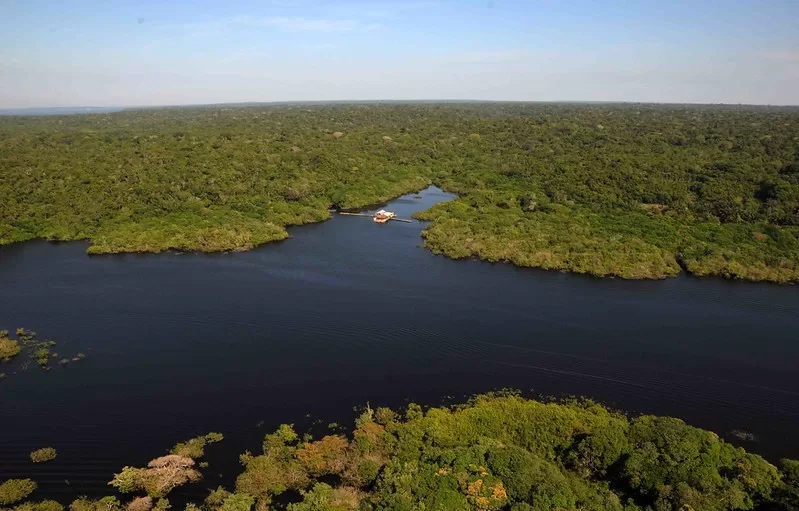
My mind, like many others, was shaped by spectacular documentaries. I confess that, for a time, I expected a “Discovery Channel”-worthy experience: jaguars lurking in every tree, giant anacondas sliding on every bank, dramatic encounters with wild fauna at every river bend. However, through research and conversations with those who have been there, I realized that such an expectation is a recipe for disappointment. The Amazon is not an open-air zoo, nor a stage set for our entertainment. It is a vast and complex ecosystem where wildlife is elusive, and the true magic lies in its subtleties, in its ability to envelop and transform us in unexpected ways.
In fact, the quintessential Amazonian experiences are far more sublime than superlative. They don’t clamor for attention but rather whisper, inviting contemplation and immersion. I envision myself canoeing through a flooded forest, where the tree canopy reflects on the mirrored water, and the sound of the paddle breaking the surface is the only noise disturbing the silence. It is in this setting that the forest reveals a new dimension, with aquatic and terrestrial life blending in unexpected ways. Fish swim among tree trunks, monkeys swing overhead, and the air is filled with the scent of damp earth and lush vegetation. It’s not about seeing a rare animal every minute, but about feeling the presence of life all around me, with every moving leaf, every distant sound.
And what about dozing in a hammock on a boat chugging upriver, slowly, with the engine maintaining a constant, hypnotic rhythm? This image brings me an indescribable sense of peace. The gentle sway of the boat, the warm wind on my face, the sun setting in shades of orange and purple over the infinite river horizon. There’s no rush, no commitments, just the flow of Amazonian life. The landscape unfolds before my eyes like a living scroll: small riverside communities, children waving from the banks, colorful birds crossing the sky. It’s an opportunity to disconnect from the frantic pace of the modern world and reconnect with a more organic time, dictated by nature. The hammock becomes a cocoon, a privileged observatory of a world that pulses at its own rhythm.
And then, the morning. Waking to the otherworldly cry of howler monkeys. This sound, which might be startling to some, is, for me, the symphony of the jungle, a powerful reminder of where I am. It’s an awakening to a world that is both ancient and vibrant, wild and welcoming. The fresh morning air, the dew on the leaves, the smell of coffee brewing in the boat’s galley. It is in these moments that the Amazon reveals itself in its fullness, not as a grand spectacle, but as an intimate and deeply personal experience.
On a river whose size is legendary, it’s actually the little things that make it special. It’s not just the vastness of the Amazon that attracts me, but the delicacy of a rare flower, the sparkle of a colorful insect, the sound of a bird I’ve never heard before. It’s the feeling of humidity in the air, the scent of approaching rain, the taste of an exotic fruit picked fresh. It’s the conversations with local guides, who share their ancestral knowledge about the forest, medicinal plants, and animal habits. It’s the smiles of the riverside children, the simplicity of their lives, and the resilience of their spirit. Given some time, the Amazon is all this and more. It’s a place that demands patience and openness but rewards with a wealth of experiences that no other part of the world can offer.
Planning the Adventure: The Amazon’s Seasons
For a tourist like myself, understanding the seasons is crucial for planning the perfect trip. The Amazon has two distinct periods, each with its own characteristics and charms.
The Dry Season (June to December) is often recommended for those seeking wildlife sightings. During these months, river levels drop significantly. This means animals tend to concentrate around remaining water sources, making them easier to spot. It’s a period of warmer temperatures, and less rain can facilitate forest treks. Trails become more accessible, and land exploration becomes a more viable option. For wildlife photography enthusiasts, this might be the ideal time to capture images of birds, monkeys, and perhaps even a glimpse of a feline on the riverbanks. The landscape transforms, revealing river beaches and sandbanks that were submerged during the wet season, offering new scenery to explore and relax.
On the other hand, the Wet Season (January to May), while having the possibility of rain, does not mean it rains all day, every day. Generally, these are intense but brief showers that refresh the air and bring renewed vitality to the forest. During this period, water levels rise considerably, flooding vast areas of the forest. It’s the perfect time to explore the “igarapés” and “igarapés” – small channels and streams that become navigable. Canoeing through flooded forests, as I mentioned, is a magical and unique experience of this season. Aquatic life spreads over larger areas, and the forest gains even greater exuberance. For those seeking a deeper immersion in the forest and the opportunity to see the Amazon from a different perspective, the wet season offers a singular beauty and an unparalleled sense of adventure. Wildlife might be a bit more dispersed, but the experience of navigating among submerged trees compensates for any difficulty in sightings.
Manaus: The Gateway and Cultural Heart
My journey to the Amazon would undoubtedly begin in Manaus. The capital of Amazonas is much more than a starting point; it’s a vibrant city, rich in history and culture, serving as a fascinating introduction to the region. The city, which flourished during the rubber boom, still boasts the grandeur of that era in its architecture. The Amazonas Theatre, with its colorful dome and opulent interior, is a testament to the wealth and splendor that once permeated the city. I imagine myself attending an opera or a concert there, feeling the history in every detail.
Beyond the theater, Manaus offers bustling markets, such as the Adolpho Lisboa Market, where I can get lost among the scents and flavors of the Amazon, tasting exotic fruits, fresh fish, and local handicrafts. And, of course, the famous “Meeting of Waters,” where the Negro and Solimões rivers meet but do not immediately mix, creating an impressive natural spectacle of contrasting colors.
And for those, like me, planning their trip in June, Manaus offers a spectacular bonus: the Festival Folclórico do Amazonas. This is a fabulous time to be in the city. The festival is an explosion of colors, sounds, and traditions, celebrating the state’s rich culture. There are performances of folk dances, such as the “boi-bumbá,” with its vibrant legends and characters, parades, live music, and a profusion of typical foods. It’s a unique opportunity to delve into the soul of the Amazonian people, to see their passions and stories expressed through art and celebration. The city’s energy during the festival is contagious, and the cultural experience is as enriching as the natural one.
Beyond the Basics: Immersing in the Amazonian Experience
To truly experience the Amazon, I know that the choice of accommodation and activities is fundamental. There are various options, from rustic ecological lodges immersed in the forest to vessels that function as floating hotels, allowing exploration of different stretches of the river. My preference would be for a lodge that offers an authentic connection with nature, perhaps with bungalows built on stilts, allowing me to fall asleep to the sounds of the forest and wake up to the birdsong.
The activities would be varied and carefully planned. In addition to canoeing, which I’ve already mentioned, I would love to hike through the jungle with an experienced local guide. Not necessarily to see a jaguar, but to learn about medicinal plants, animal tracks, and the complex web of life that exists there. Piranha fishing, even if just for the experience of catching and releasing, would be a fun adventure. And the night excursions, to spot caimans and listen to the sounds of the forest under the cloak of darkness, promise to be unforgettable.
Visiting riverside communities is another highlight on my list. I want to learn about the way of life of these people, their relationship with the river and the forest, and perhaps even buy local handicrafts, supporting the region’s economy. Birdwatching, with binoculars in hand, would be a constant activity, given the incredible biodiversity of the Amazon.
The importance of a local guide cannot be overstated. They are the eyes and ears of the forest, the guardians of ancestral knowledge. A good guide will not only keep me safe but also enrich my experience, pointing out details I would never notice, sharing stories and legends, and helping me understand the complexity and beauty of this ecosystem.
Essential Preparations for the Traveler
As a cautious traveler, I know that preparation is key. The list of essential items would include light, quick-drying clothing, preferably in neutral colors to avoid attracting insects. A good hat, sunglasses, and sunscreen are indispensable to protect myself from the equatorial sun. Insect repellent, with a high concentration of DEET, will be my best friend. Binoculars and a good camera are mandatory to capture the beauty of the wildlife and landscape. Comfortable, waterproof shoes for trails and sandals for the boat complete the attire.
In terms of health and safety, consulting a doctor before the trip to check necessary vaccinations (yellow fever, tetanus, hepatitis) and discuss malaria prevention is a priority. Staying hydrated by drinking plenty of water will be crucial due to the humid climate. And, of course, respecting nature, not touching wild animals, not leaving litter, and following guide instructions are golden rules for responsible tourism.
Local gastronomy is something that excites me. Tasting freshwater fish like tambaqui and pirarucu, prepared in various ways, trying exotic fruits that only exist in the region, and savoring the cuisine with indigenous and Portuguese influences.
Finally, I am aware of the challenges. The constant humidity, the presence of insects (which, with the right repellent, can be managed), and the feeling of remoteness. But, for me, these are not obstacles, but rather part of the adventure. The Amazon is an invitation to a “digital detox,” to a disconnection from the virtual world for a deeper connection with the real world.
The Promise of the Amazon
The Amazon is not a destination for those seeking luxury and convenience at all costs, but for those yearning for authenticity and a genuine connection with nature. It is a place that challenges our expectations and rewards us with a deeper understanding of our planet and ourselves. The promise of the Amazon is not of spectacular encounters at every turn, but of sublime moments that accumulate, creating a tapestry of memories and sensations that will last forever.
Given some time, the Amazon is all this and more. It is a place that calls to me, not just to be visited, but to be felt, understood, and, above all, respected. I can’t wait to embark on this journey and discover the small and great wonders that this mythical sanctuary has to offer.