Pará: The Eastern Heart of the Brazilian Amazon – An Unforgettable Journey
When envisioning the Amazon, the image that often comes to mind is one of a vast, untouched forest, crisscrossed by majestic rivers. While this vision holds true, the Amazon is also a mosaic of states and cultures, each with its own unique identity and treasures waiting to be discovered. Among them, the state of Pará stands out as a vibrant and multifaceted gateway to this colossal biome. Although it doesn’t bear the name “Amazonas” like its neighbor, it would be a mistake to think that Pará isn’t an integral and spectacular part of the Amazon. In fact, Pará offers some of the most fascinating and accessible Amazonian destinations, blending rich history, vibrant culture, and breathtaking natural landscapes.
Prepare for an immersion into a state that pulsates with Amazonian life, from its historic cities to its freshwater beaches and monumental forests.
Belém: The Vibrant Eastern Gateway
With a population of approximately 1.44 million inhabitants, Belém is the capital of Pará and the eastern gateway to the Amazon region. More than just a transit point, Belém is a destination in its own right, deserving at least a few days of your attention. It is a rewarding city, where streets and parks are shaded by majestic mango trees, and the pastel facades of once-opulent mansions now gently fade under the tropical sun, telling tales of a glorious past.
Belém is a cultural melting pot, a place where indigenous, African, and European heritage intertwine, creating a unique and engaging atmosphere. The city offers a series of fascinating museums that explore its history and biodiversity, vibrant markets that are a delight for the senses, and a rich gastronomic scene, with restaurants and bars serving the authentic flavors of the Amazon. Furthermore, Belém serves as a strategic starting point for overnight trips and deeper explorations, such as the enchanting coastal islands of Algodoal and Marajó.
A Deep Dive into Belém’s History
Belém’s history is as rich and complex as the Amazon itself. Founded in 1616, it was one of the first Portuguese towns established on the banks of the Amazon River. For over two centuries, Belém prospered, driven by the exploitation of the region’s vast natural resources. This prosperity, however, came at an immense human cost. The city’s economy relied heavily on enslaved labor, initially from local indigenous groups and later from Africans forcibly brought to the region. These individuals were compelled to find and harvest “Amazonian treasures” – such as cacao, indigo, and animal skins – which were then exported to Europe, fueling the metropolis’s wealth.
However, this success was fragile. A severe economic downturn in the early 19th century, combined with social tensions and the quest for freedom, helped spark a popular uprising and a bloody civil war, known as the Cabanagem (1835-1840). This tumultuous period left deep marks on the city and in the memory of its people, shaping the Pará identity and its resilience. Today, walking through Belém’s streets, one can feel the echoes of this history, from its colonial architecture to the strength and cultural diversity of its inhabitants.
Must-See Attractions in Belém
For tourists, Belém offers a series of captivating and educational experiences:
- Ver-o-Peso Market: The pulsating heart of Belém, Ver-o-Peso is one of the largest and oldest open-air markets in Latin America. Located on the banks of Guajará Bay, it is a spectacle of colors, smells, and sounds. Here, you’ll find an endless array of Amazonian products: fresh fish from rivers and estuaries, medicinal and mystical herbs, exotic fruits you’ve never seen before, indigenous and riverside handicrafts, and an impressive variety of regional delicacies. It’s the perfect place to feel the true pulse of the city and sample Pará cuisine, such as the famous tacacá, pato no tucupi, and açaí, served in a unique, savory way.
- Estação das Docas (Docks Station): A remarkable example of urban revitalization, Estação das Docas transformed old port warehouses into a modern tourist complex. With sophisticated restaurants, lively bars, handicraft shops, and a theater, it’s an ideal spot to enjoy a meal with a bay view, admire the sunset over the river, and watch cultural performances. The iron and glass architecture, reminiscent of the rubber boom era, lends a special charm to the place.
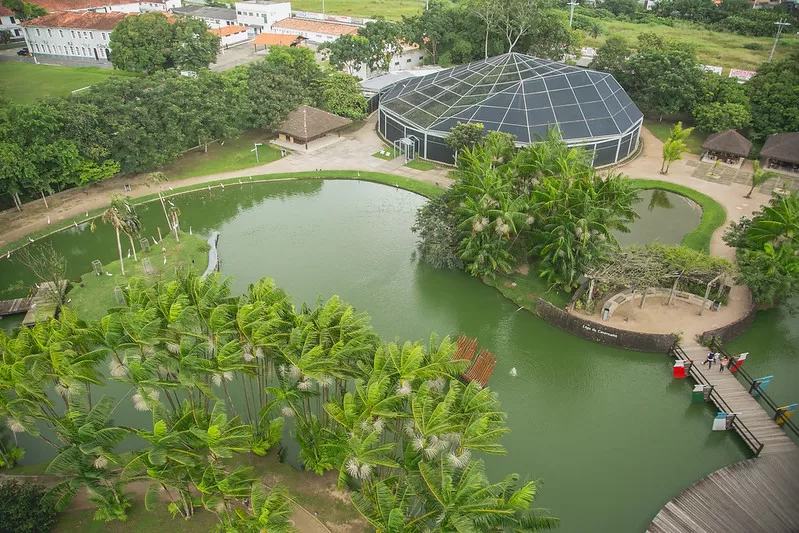
- Mangal das Garças: A green oasis in the heart of the city, Mangal das Garças is a zoobotanical park offering a tranquil refuge and a glimpse of Amazonian fauna and flora. With a butterfly house, aviary, iguanas, and even a lighthouse with panoramic views of the city and river, it’s a charming place for a relaxing stroll and to learn about local biodiversity.
- Feliz Lusitânia Complex: This historic area houses Belém’s oldest landmarks. It includes the Forte do Presépio (Nativity Fort), the city’s founding site, offering panoramic views of Guajará Bay; the Casa das Onze Janelas (House of Eleven Windows), a former colonial hospital transformed into a cultural space and art gallery; and the imposing Catedral da Sé (Cathedral of the See), one of the city’s oldest and most beautiful churches. Walking through Feliz Lusitânia is like taking a journey back in time, exploring Belém’s colonial roots.
- Museu Paraense Emílio Goeldi: For science and nature enthusiasts, this is one of the most important research centers in the Amazon. The museum features a zoobotanical park with Amazonian species and an aquarium, as well as a research collection on the region, making it an excellent place to deepen your knowledge of the flora, fauna, and indigenous cultures.
Beyond Belém: Pará’s Coastal Gems
Belém’s strategic location also makes it the ideal starting point for exploring Pará’s coastal islands, which offer a beach and nature experience distinct from Brazil’s traditional coastline.
- Algodoal Island: Accessible by boat from Marudá, Algodoal is a paradise of deserted beaches and a laid-back atmosphere. The island is famous for not allowing motorized vehicles, meaning transportation is done on foot, by horse-drawn carriage, or by canoe. Its extensive beaches, dunes, and untouched mangroves are ideal for those seeking tranquility, contact with nature, and a slower pace of life. It’s a place to disconnect and appreciate the simplicity of riverside life.
- Marajó Island: The world’s largest fluvio-maritime island, Marajó is a world apart. With an area larger than many countries, the island is a unique ecosystem where the Amazon rainforest meets vast savannas, mangroves, and oceanic beaches. Marajó is famous for its buffaloes, which are used for transport, labor, and even for the production of cheese and meat. Marajoara culture is rich, with a highlight on pre-Columbian ceramics, whose intricate pieces are found in museums and reproduced by local artisans. The island offers opportunities for buffalo rides, birdwatching, farm explorations, and a chance to experience Amazonian rural life.
Pará’s Amazonian Interior: Monumental Forests and River Beaches
The true Amazonian essence of Pará reveals itself as we venture inland, where the forest reigns supreme and rivers shape the landscape.
- Tapajós National Forest (FLONA Tapajós): Located along the Tapajós River, this national forest is a treasure trove of biodiversity and history. FLONA Tapajós is home to “monster trees,” such as the imposing sumaúma, which majestically rises above the forest canopy, and rubber trees, which tell the fascinating living history of the rise and fall of the rubber boom in the Amazon. Walking its trails is an immersive experience, where local guides, many of whom are members of the traditional communities living within the forest, share their knowledge of the flora, fauna, and sustainable forest management practices. It’s a unique opportunity to learn about life in the forest and the importance of conservation.
- Alter do Chão: Accessible from Santarém, which in turn can be reached by flight or boat from Belém, Alter do Chão is a tranquil and charming village, affectionately nicknamed the “Amazonian Caribbean.” During the dry season (typically August to December), the water level of the Tapajós River drops, revealing extensive white sand beaches and crystal-clear waters, the most famous being Ilha do Amor (Island of Love), a strip of sand that forms in front of the village.
Alter do Chão is the epitome of relaxation and natural beauty. In addition to enjoying the beaches, visitors can take boat trips along the Tapajós and Arapiuns rivers, exploring igarapés (small waterways), lakes, and riverside communities. Lago Verde (Green Lake), with its emerald waters and lush vegetation, invites a refreshing swim. The nightlife is relaxed, with riverside bars and restaurants. Local culture is vibrant, and the village hosts the Sairé Festival in September, a folkloric and religious celebration that attracts visitors from all over Brazil. Alter do Chão serves as an excellent base for exploring FLONA Tapajós and other beauties of the Tapajós River.
Essential Tips for the Traveler in Pará
To make the most of your trip to Pará and the Eastern Amazon, consider the following tips:
Best Time to Visit
Pará, like the rest of the Amazon, has two main seasons:
- Wet Season (December to May): Rivers are full, allowing for exploration of igarapés and flooded forests by boat. The landscape is lush and green.
- Dry Season (June to November): River levels drop, revealing the famous freshwater beaches, such as those in Alter do Chão. This is the best time for beach activities and land trails.
Both seasons offer unique experiences, and the choice depends on your primary interest. The climate is hot and humid year-round.
What to Pack
- Lightweight, quick-drying clothing: Preferably in light and neutral colors to avoid attracting insects. Long sleeves and long pants are recommended for protection against mosquitoes and sun.
- Comfortable footwear: Walking shoes, sandals that can get wet, and, if you plan to hike in the forest, rubber boots (often provided by tour operators).
- Sun protection: Wide-brimmed hat, sunglasses, and high-SPF sunscreen.
- Insect repellent: Essential, preferably with DEET.
- Rain jacket or anorak: Rains can be sudden.
- Binoculars: For bird and wildlife observation.
- Camera: With water protection, if possible.
- Personal medications and a basic first-aid kit.
- Reusable water bottle: To stay hydrated and reduce plastic waste.
Health and Safety
- Vaccination: Check that your vaccinations are up to date, especially yellow fever, which is highly recommended for the Amazon region. Consult a doctor or travel clinic in advance.
- Hydration: Drink plenty of water to avoid dehydration due to heat and humidity.
- Local Guides: When exploring forests or rivers, always hire experienced local guides. They know the region, its fauna, flora, and necessary precautions.
- Respect Nature: Do not feed wild animals, do not remove plants or animals from the forest, and dispose of your waste properly.
Responsible Tourism
Pará is a state of immense natural and cultural beauty, and responsible tourism is crucial for its preservation.
- Support Local Communities: Buy handicrafts directly from producers, use services from local guides and tour operators. This directly contributes to the communities’ economy and encourages conservation.
- Minimize Your Impact: Be mindful of your water and energy consumption. Avoid products that contribute to deforestation or illegal exploitation.
- Respect Local Culture: Ask permission before photographing people, learn a few phrases in Portuguese, and be open to new cultural experiences.
An Amazon for All Senses
The state of Pará is a jewel of the Brazilian Amazon, offering a complete experience that goes far beyond the dense forest. From the historical and cultural effervescence of Belém, with its vibrant markets and colonial architecture, to the serenity of Alter do Chão’s river beaches and the grandeur of the Tapajós National Forest’s trees, Pará invites travelers on a journey of discovery.
It is a place where history meets wild nature, where ancestral culture manifests at every turn, and where the hospitality of the Pará people welcomes everyone. Whether you are an adventurer seeking trails and wildlife, a history and culture enthusiast, or simply someone looking to relax on paradisiacal freshwater beaches, Pará has something to offer.
By choosing Pará as your Amazonian destination, you will not only witness the unparalleled beauty of this biome but also contribute to the sustainability of its communities and the preservation of one of the planet’s most important ecosystems. Prepare for an adventure that will awaken all your senses and leave memories that will last a lifetime.