Chapada dos Guimarães National Park x Chapada dos Veadeiros National Park in Brazil
Brazil’s vast continental expanse is home to ecosystems of unparalleled richness. In the heart of the country, the Cerrado stands out as the world’s most biodiverse savanna, a stage for landscapes that defy the imagination. Within this biome, two ecotourism destinations emerge as true crown jewels: Chapada dos Guimarães National Park in Mato Grosso and Chapada dos Veadeiros National Park in Goiás. Both offer a spectacular journey through canyons, waterfalls, ancient rock formations, and vibrant biodiversity. However, each possesses a unique identity, attracting different traveler profiles in search of adventure, contemplation, and a deep connection with nature.
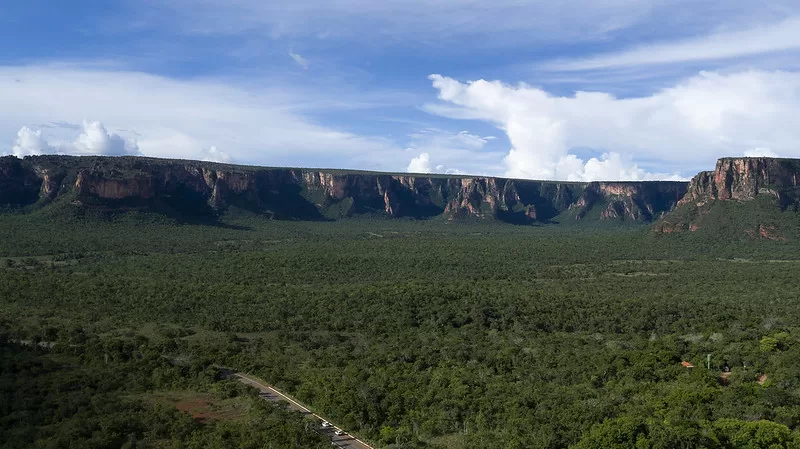
This article provides a detailed comparative analysis of the two parks, evaluating key criteria for any travel planner: size and accessibility, the richness of their fauna and flora, the infrastructure available to visitors, and the optimal time to visit. By the end of this reading, you will have a comprehensive overview to decide which of these Cerrado giants will be the setting for your next great adventure.
Size and Accessibility: Gateways to Paradise
The first major difference between the two parks lies in their scale and accessibility. Chapada dos Guimarães holds a notable advantage in terms of access. Located just 65 kilometers from Cuiabá, the capital of Mato Grosso, the trip to the town of Chapada dos Guimarães—the main base for tourists—is quick and follows a well-marked highway (MT-251). This proximity to a major urban center with an international airport makes the destination extremely practical for those coming from other regions of Brazil or the world. The Chapada dos Guimarães National Park itself covers an area of approximately 33,000 hectares (about 330 km²), protecting a significant portion of this ecosystem.
On the other hand, Chapada dos Veadeiros National Park is impressive in its sheer magnitude. Following a significant expansion in 2017, the park now protects an area of 240,611 hectares (approximately 2,406 km²), nearly eight times larger than its Mato Grosso counterpart. This vast expanse is distributed among the municipalities of Alto Paraíso de Goiás, Cavalcante, Teresina de Goiás, Nova Roma, and São João d’Aliança. The main entry point for most tourists is the city of Alto Paraíso de Goiás, located about 230 km from Brasília. The journey from the federal capital is the most common route, and although the road is of good quality, the trip is considerably longer. The base towns, such as Alto Paraíso, Vila de São Jorge, and Cavalcante, serve as strategic points for exploring the different areas of the park and its numerous attractions, which often require significant travel by car.
In summary, while Guimarães offers the convenience of quick and easy access from a capital city, Veadeiros commands attention with its territorial grandeur, demanding more elaborate logistical planning to explore its vast and diverse landscapes.
Fauna and Flora: The Secret Life of the Cerrado
Both parks are sanctuaries of the Cerrado, sharing many of the biome’s emblematic species. The vegetation is characterized by trees with twisted trunks and thick bark, adapted to a climate with well-defined dry and rainy seasons, alongside a multitude of shrubs, grasses, and flowers of singular beauty. Plants such as the ipê, the wolf apple tree (whose fruit feeds the maned wolf), the buriti palm, and the “sempre-viva” (everlasting) flowers color the landscape.
The Cerrado’s fauna is equally rich and often discreet. Both parks are habitats for endangered species, including the maned wolf, jaguar, giant anteater, ocelot, and giant armadillo. Wildlife observation requires patience and often a bit of luck. The red brocket deer, the red-legged seriema, the king vulture, and a wide array of birds, reptiles, and insects make up the local web of life.
Chapada dos Guimarães, due to its location at the transition between the Cerrado and the Amazon and its proximity to the Pantanal, boasts a unique biodiversity. The park is home to river springs that form the Coxipó river basin, a major contributor to the Mato Grosso Pantanal. It is estimated that the park protects about 659 plant species, 44 fish species, 242 bird species, and 76 mammal species.
Chapada dos Veadeiros, in turn, boasts impressive numbers due to its enormous size and its role as a major water dispersal center, protecting the headwaters of tributaries to both the Amazon and São Francisco basins. UNESCO recognized the region as a Natural World Heritage Site in 2001, highlighting its importance for the preservation of the Cerrado. The park’s expansion aimed to protect 17 endangered plant species and 32 endangered fauna species, including the rare Brazilian merganser. The diversity of phytophysiognomies, ranging from open grasslands to gallery forests, creates a myriad of habitats that sustain this rich biodiversity.
Therefore, while both are vital refuges for Cerrado wildlife, Chapada dos Veadeiros, with its scale and World Heritage status, stands as one of the most important biodiversity sanctuaries in the biome worldwide.
Infrastructure and Attractions: Breathtaking Landscapes
The visitor experience in each park is shaped by the available infrastructure and the profile of its attractions. Chapada dos Guimarães concentrates many of its most famous tourist spots within and around the national park, with several accessible via self-guided trails. The postcard image is undoubtedly the Véu de Noiva (Bridal Veil) Waterfall, with an imposing 86-meter drop, easily accessible from a viewpoint. The park also offers the “Circuito das Cachoeiras” (Waterfall Circuit), a route leading to a sequence of waterfalls and bathing pools. Other attractions, such as the Cidade de Pedra (City of Stone) with its monumental rock formations, and the Vale do Rio Claro (Clear River Valley), require the accompaniment of accredited guides. Outside the park’s boundaries, private complexes like the Aroe Jari Cave (the largest sandstone cave in Brazil) and the Salgadeira resort complement the tourist offerings. The town of Chapada dos Guimarães provides excellent infrastructure with inns, restaurants, and agencies.
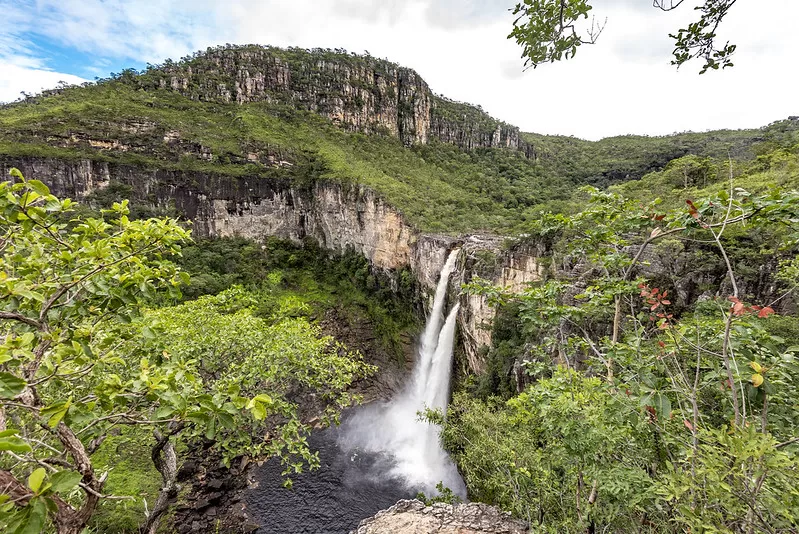
Chapada dos Veadeiros is often called the “birthplace of waters,” and for good reason. The destination is famous for the quantity and diversity of its waterfalls. Visitation is more decentralized, with attractions spread across the municipalities of Alto Paraíso, São Jorge, and Cavalcante. Within the national park, from the entrance in São Jorge, visitors can access trails leading to the Saltos do Rio Preto (with drops of 120 and 80 meters) and the Corredeiras (Rapids). Outside the park, a multitude of spectacular waterfalls are located on private properties and require an entrance fee. Among the most famous are the Santa Bárbara Waterfall in Cavalcante, with its incredibly blue waters, the Catarata dos Couros complex, and the Vale da Lua (Valley of the Moon), a rock formation carved by the São Miguel River that resembles the lunar surface. The support infrastructure in the base towns is robust, especially in Alto Paraíso, which hosts a wide variety of inns, restaurants, and services, and is also known for its strong mystical and esoteric appeal.
In short, Guimarães offers a journey with iconic and more concentrated attractions, ideal for shorter itineraries. Veadeiros, on the other hand, is a universe of waterfalls and landscapes to be explored, demanding more time and travel but rewarding visitors with an impressive variety of experiences.
Best Time to Travel: The Cycle of Water and Sun
The climate in both chapadas is seasonal tropical, with two well-defined seasons: dry and rainy. The choice of the best time to visit depends directly on the type of experience the traveler is seeking.
The dry season, which generally runs from May to September, is considered by many to be the best time to visit both destinations. In Guimarães, this period offers sunny days and very little rain, ideal for hiking and safely enjoying the waterfalls. Daytime temperatures are pleasant, but nights can be cool.
In Chapada dos Veadeiros, the dry season (from April to September) is also the most recommended. The trails are safer, the waterfall water is clearer, and the risk of flash floods is virtually nil. The months from April to July are particularly suitable, as they combine the end of the rains with still-green vegetation and full waterfalls.
The rainy season, from October/November to March/April, transforms the landscape. In Guimarães, summer rains leave the vegetation lush and the waterfalls at their maximum volume, providing a spectacle of nature’s power. However, trails can become slippery, and some tours may be canceled for safety reasons.
In Veadeiros, the rainy season (November to May) requires more caution. The rains, though often brief, can be intense, increasing the risk of flash floods at the river headwaters, which can make bathing in waterfalls dangerous. On the other hand, this is the time when the flora blossoms, and some waterfalls that dry up in winter reach their peak.
Which Chapada to Choose?
The decision between a trip to Chapada dos Guimarães or Chapada dos Veadeiros fundamentally depends on the traveler’s profile, available time, and expectations.
Chapada dos Guimarães is the ideal choice for those seeking a shorter, more accessible trip without sacrificing spectacular landscapes. It is perfect for a first-time chapada experience, for families, or for those who wish to combine ecotourism with the convenience of being near a capital city. Its reddish cliffs, panoramic viewpoints, and the iconic Véu de Noiva waterfall guarantee an unforgettable journey.
Chapada dos Veadeiros, conversely, is a destination for those who desire a deeper exploration and have more time available. It is a paradise for lovers of waterfalls, long hikes, and for those seeking a more intense connection with nature and spirituality. Its vastness, the diversity of its attractions, and its World Heritage title place it in a unique category, promising a robust and transformative adventure in the heart of Brazil.
Regardless of the choice, both national parks are testaments to the grandeur of the Brazilian Cerrado and offer a unique opportunity to contemplate, explore, and reconnect with nature in its purest and wildest form.