Chapada Diamantina National Park x Chapada dos Guimarães National Park in Brazil
Brazil, a country of continental dimensions, is blessed with unparalleled natural wealth, manifested in its diverse biomes and breathtaking landscapes. Among the most precious treasures of its biodiversity and geodiversity are its national parks, protected areas that safeguard unique ecosystems and offer singular opportunities for ecotourism and connection with nature. In this context, two names resonate with particular force in the imagination of travelers and adventure lovers: Chapada Diamantina National Park in Bahia and Chapada dos Guimarães National Park in Mato Grosso. Both are destinations that promise memorable experiences but, despite sharing the term “Chapada” (plateau) in their names, possess distinct characteristics that make them unique.
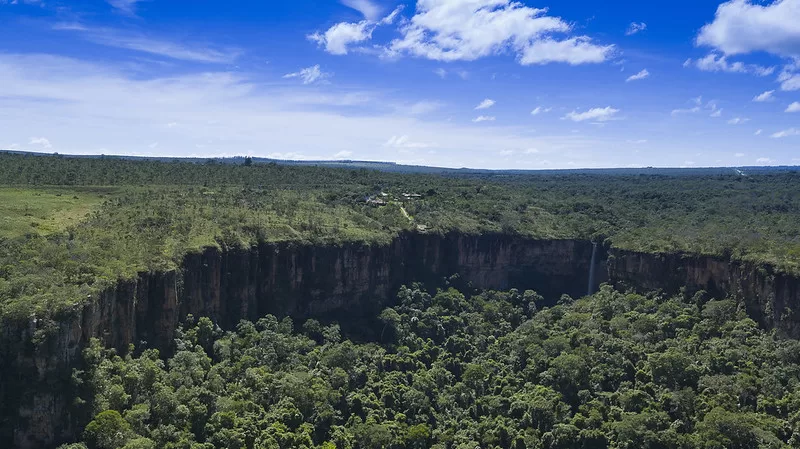
The primary objective of this article is to conduct an in-depth comparative analysis of these two magnificent national parks. The analysis will be based on specific and fundamental criteria for any traveler planning their next trip: the size and territorial extent of each protected area, the richness and diversity of their fauna, the exuberance and particularities of their flora, the structure and infrastructure available to visitors, and finally, the best time to fully enjoy everything each Chapada has to offer. By exploring these dimensions, we aim to provide a detailed guide that will assist the reader in understanding the nuances of each destination, allowing for a more informed choice aligned with their travel interests and expectations. May this textual journey serve as an inspiration to explore the natural wonders of Brazil and, above all, to value and contribute to the conservation of these invaluable heritages.
1. Size and Extent
The first point of comparison between Chapada Diamantina National Park and Chapada dos Guimarães National Park lies in their territorial dimensions, a factor that directly influences the diversity of landscapes, ecosystems, and the visitor experience itself. The vastness of a park can mean a greater variety of trails, waterfalls, and points of interest, while a smaller park may offer a more concentrated and accessible experience.
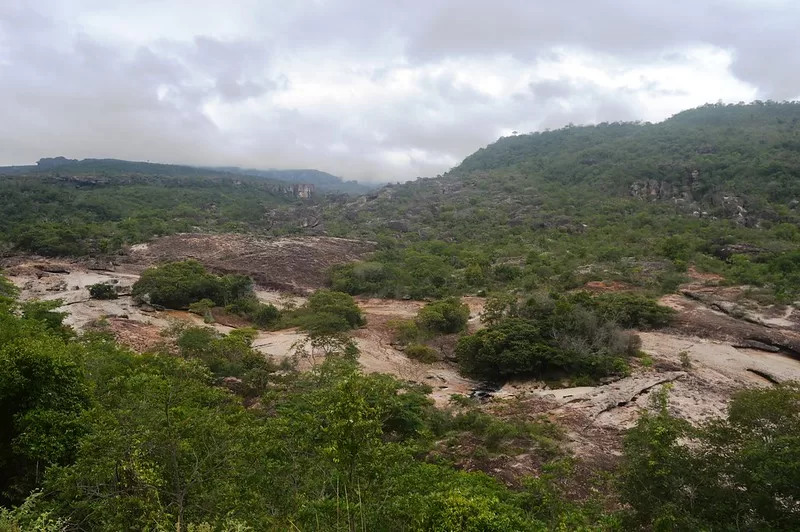
Chapada Diamantina National Park, located in the heart of Bahia, is a conservation area of grand proportions. With an area ranging from approximately 152,000 to 152,575 hectares, it extends across several municipalities, such as Lençóis, Palmeiras, Andaraí, Mucugê, Ibicoara, and Itaetê. This vast territorial expanse gives the park an impressive geological and ecological diversity, housing different biomes and rock formations that shape breathtaking landscapes. The park’s size allows for exploration that can last for days or even weeks, with numerous routes and attractions scattered throughout the region, from deep valleys and imposing canyons to plateaus and mountain ranges.
In contrast, Chapada dos Guimarães National Park, situated in the state of Mato Grosso, has a considerably smaller area but is no less significant in terms of natural beauty and ecological importance. Its territorial extent is approximately 32,630 to 33,000 hectares. Although smaller in area than its Bahian counterpart, the Mato Grosso park is a sanctuary of the Cerrado biome, protecting a representative sample of its landscapes and biodiversity. The concentration of attractions in a more compact area can be an advantage for travelers with limited time, allowing them to explore the main tourist spots more easily and in a shorter period.
In summary, Chapada Diamantina stands out for its immensity, offering a more extensive journey with a greater variety of scenarios, ideal for those seeking a prolonged adventure and the discovery of multiple retreats. Conversely, Chapada dos Guimarães, with its more contained area, provides a more accessible and focused experience, perfect for those who wish to explore the beauties of the Cerrado in a more concise, yet equally enriching, trip.
2. Richness of Fauna
The diversity of animal life is one of the great attractions of any protected natural area, and the National Parks of Chapada Diamantina and Chapada dos Guimarães are no exception. Both harbor a wide range of species, reflecting the richness of their respective biomes, but with particularities that distinguish them.
Chapada Diamantina National Park, set in a transitional region between the Caatinga, Cerrado, and Atlantic Forest, features a diverse and, in some cases, endemic fauna. The avifauna is particularly noteworthy, with over 300 registered bird species, including the hooded visorbearer (Augastes lumachellus), a species endemic to the region. Among the mammals, it is possible to find large felines such as jaguars and pumas, as well as lesser anteaters, black-tufted marmosets, and rock cavies. The presence of reptiles and amphibians also contributes to the park’s ecological complexity, making it an important refuge for Brazilian biodiversity.
In turn, Chapada dos Guimarães National Park is a sanctuary for the typical fauna of the Cerrado biome, one of the richest and most threatened on the planet. The park is home to iconic species such as the maned wolf, jaguar, pampas deer, giant anteater, tapir, rhea, and red-legged seriema. The avifauna is also abundant, with over 250 bird species recorded, including parrots and macaws that color the region’s sky. The visibility of many of these animals is greater during the dry season when the vegetation is less dense and animals concentrate at water points, offering excellent opportunities for wildlife observation.
In essence, while Chapada Diamantina is notable for the presence of endemic species and a fauna that reflects the confluence of different biomes, Chapada dos Guimarães is a remarkable example of the Cerrado fauna, with the possibility of spotting large mammals and birds characteristic of this biome. Both plateaus offer a fascinating journey for wildlife enthusiasts, each with its peculiarities and treasures to be discovered.
3. Diversity of Flora
The flora of a national park is a mirror of its biome and the geographical and climatic conditions that shape it. Both Chapada Diamantina and Chapada dos Guimarães exhibit an exuberant flora adapted to their respective environments, offering a spectacle of colors and forms for visitors.
Chapada Diamantina National Park is a true mosaic of ecosystems, which is reflected in its diverse flora. The region hosts remnants of the Atlantic Forest, areas of Cerrado, Rupestrian Fields, and Caatinga, each with its distinct botanical characteristics. This transition of biomes results in a flora rich in endemic species, such as various orchids (including the rare Adamantinia miltonioides, Cattleya elongata, Cattleya tenuis, and Cattleya x tenuata), bromeliads, and cacti, which have adapted to the soil and climate conditions of the region. The sempre-vivas (everlastings), with their delicate and resistant flowers, are another highlight of the local flora, especially in the rupestrian fields. Trees such as aroeiras, barrigudas, carnaúbas, and catingueiras also compose the landscape, showing the resilience of the vegetation in a challenging environment.
Chapada dos Guimarães National Park, on the other hand, is a faithful representative of the Cerrado biome’s flora, known for its Brazilian savanna with twisted-trunk trees and thick bark, adapted to fire and drought. The park’s flora includes tree species such as peroba, ipê (with its spectacular blooms), jatobá, babaçu, pequizeiro, mangabeira, and buriti, which stand out in different vegetation formations. In addition to trees, the Cerrado of Chapada dos Guimarães is rich in orchids, bromeliads, and a multitude of flowers of various colors and sizes that bloom at different times of the year. The park features six distinct vegetation types, including semi-deciduous slope and gallery forests, which harbor even greater biodiversity. It is estimated that the park is home to over a thousand known species of fauna and flora, highlighting its importance for the conservation of the Cerrado.
In short, Chapada Diamantina offers a botanical journey through multiple biomes, with a high concentration of endemic species and a landscape shaped by geological diversity. Chapada dos Guimarães, in turn, is an excellent example of the richness of the Cerrado, with its characteristic vegetation formations and a flora adapted to the conditions of this biome. Both plateaus are unmissable destinations for those who appreciate the beauty and complexity of Brazilian flora.
4. Visitor Structure and Infrastructure
The experience of a trip to a national park is significantly influenced by the available structure and infrastructure, both within and around the protected area. Ease of access, the existence of support services, and the organization of attractions are crucial factors for planning and enjoying the visit. In this regard, Chapada Diamantina and Chapada dos Guimarães National Parks present distinct approaches.
Chapada Diamantina National Park, due to its vast extent and the nature of its creation, has a peculiar infrastructure. Access to the park is facilitated by several entrances, with 38 trails connecting to municipalities such as Andaraí, Ibicoara, Itaetê, Lençóis, Mucugê, and Palmeiras, where the ICMBio administrative headquarters is located. However, it is important to note that the park itself does not have a robust internal infrastructure, such as restrooms or visitor support centers in its more remote areas. The travel experience in Chapada Diamantina is largely supported by the tourist infrastructure of the surrounding towns. Lençóis, for example, is considered the tourist capital of the Chapada and offers an excellent network of inns, restaurants, ecotourism agencies, and specialized guides who organize expeditions and provide the necessary support to explore the park’s beauties. This decentralization of infrastructure requires more detailed planning from the traveler, who usually stays in the base towns and takes daily tours or multi-day expeditions with the support of local operators.
In contrast, Chapada dos Guimarães National Park has a more concentrated and developed infrastructure within its limits, although it also relies on the support of neighboring cities. Strategically located between the capital Cuiabá and the city of Chapada dos Guimarães, the park offers ample infrastructure including restrooms, kiosks, craft shops, and parking, facilitating visitation and access to the main tourist points. The city of Chapada dos Guimarães, in turn, complements this structure with accommodation and dining options. Recently, the park underwent a concession process, with planned investments to further expand and modernize visitation conditions, promising an even more comfortable and organized experience for tourists. This centralized approach to infrastructure can be more convenient for travelers who prefer to have all facilities at hand during their trip.
In summary, Chapada Diamantina offers a journey that relies heavily on the infrastructure of the surrounding towns, providing a more “wild” and exploratory experience with the support of local guides. Chapada dos Guimarães, with its more consolidated infrastructure within the park, offers a more comfortable and accessible trip, ideal for those seeking practicality and comfort. The choice between one and the other will depend on the travel style and expectations of each visitor.
5. Best Time for an Unforgettable Trip
Choosing the best time to visit a national park is crucial to ensure that the trip meets the traveler’s expectations, especially when it comes to outdoor activities and nature observation. Climatic conditions directly influence the accessibility of trails, the volume of waterfalls, and the visibility of fauna. Both Chapada Diamantina and Chapada dos Guimarães have distinct periods that favor different types of experiences.
In Chapada Diamantina National Park, the climate is marked by two well-defined seasons: dry and rainy. The dry season, which generally extends from May to September/October, is widely considered the best time for those looking to explore the trails and waterfalls with greater ease. During this period, rainfall is scarce, which makes the trails safer and less slippery, and the weather is milder and cooler, ideal for long hikes. Furthermore, it is during the dry season that the observation of specific natural phenomena becomes more favorable, such as the sunbeam that illuminates the Poço Azul (best between February and October) and the Poço Encantado (best between April and September). However, some waterfalls may have a reduced water volume. The rainy season, from November to March/April, transforms the landscape of Chapada Diamantina. The rains, although they can make some trails more difficult, ensure that the waterfalls reach their maximum volume, providing impressive natural spectacles and lush, vibrant vegetation. For lovers of photography and nature in its green fullness, this can be an equally rewarding period, provided one is prepared for wetter trails.
For Chapada dos Guimarães National Park, the dry season, which occurs from May to September, is unanimously pointed out as the best time for visitation. During these months, the weather is milder and rainfall is minimal, which facilitates access to trails and tourist spots. Fauna visibility is also favored during this period, as animals tend to concentrate at remaining water points, making them easier to spot. Winter, which coincides with part of the dry season (June to September), offers an ideal setting for those seeking cooler and more pleasant temperatures for outdoor activities. On the other hand, the rainy season, from October to April, although it brings an increase in the volume of waterfalls and a greener landscape, can make some trails more challenging and slippery, requiring greater preparation and attention from visitors.
In summary, the choice of the best time for your trip will depend on your profile and what you seek in each Chapada. If the priority is to explore trails with comfort and safety, the dry season is the most suitable for both parks. If the objective is to contemplate voluminous waterfalls and exuberant nature, the rainy season in Chapada Diamantina may be an option, while in Chapada dos Guimarães, the dry season still offers the best overall visiting conditions.
At the end of this comparative journey through the National Parks of Chapada Diamantina and Chapada dos Guimarães, it is evident that, although both share the grandeur of the geological formations that give them their names, each has a unique identity and offers distinct experiences to its visitors. The choice between one and the other, or the decision to visit both, will fundamentally depend on the interests, available time, and travel style of each adventurer.
Chapada Diamantina, with its vast territory of over 150,000 hectares, reveals itself as a destination for longer and more exploratory trips. Its fauna and flora reflect the transition of multiple biomes, with the presence of endemic species and an ecological diversity that invites continuous discovery. The infrastructure, although concentrated in the surrounding towns, provides robust support for expeditions that can last for days, with the assistance of local guides. The best time to visit varies according to the objective: the dry season for more accessible trails and the rainy season for waterfalls in their maximum splendor.
On the other hand, Chapada dos Guimarães National Park, with its approximately 33,000 hectares, offers a more compact and focused journey, ideal for those seeking an intense experience in the heart of the Cerrado. Its fauna and flora are representative of this biome, with the chance to spot large mammals and characteristic birds. The more centralized infrastructure within the park, combined with the support of nearby cities, provides greater convenience and accessibility. The dry season, from May to September, is the most recommended period to fully enjoy its beauties, with mild weather and greater visibility of wildlife.
Chapada Diamantina is for those who yearn for a grander adventure, with varied landscapes and the feeling of exploring an immense territory. Chapada dos Guimarães, in turn, is perfect for those seeking the essence of the Cerrado in a more accessible trip with more consolidated infrastructure. Both parks are jewels of Brazil’s natural heritage, and a visit to either is a unique opportunity to connect with nature, witness the grandeur of geology and biodiversity, and contribute to the conservation of these vital ecosystems. May this comparison inspire many to embark on their own journeys through these plateaus, discovering the wonders that Brazil has to offer.